
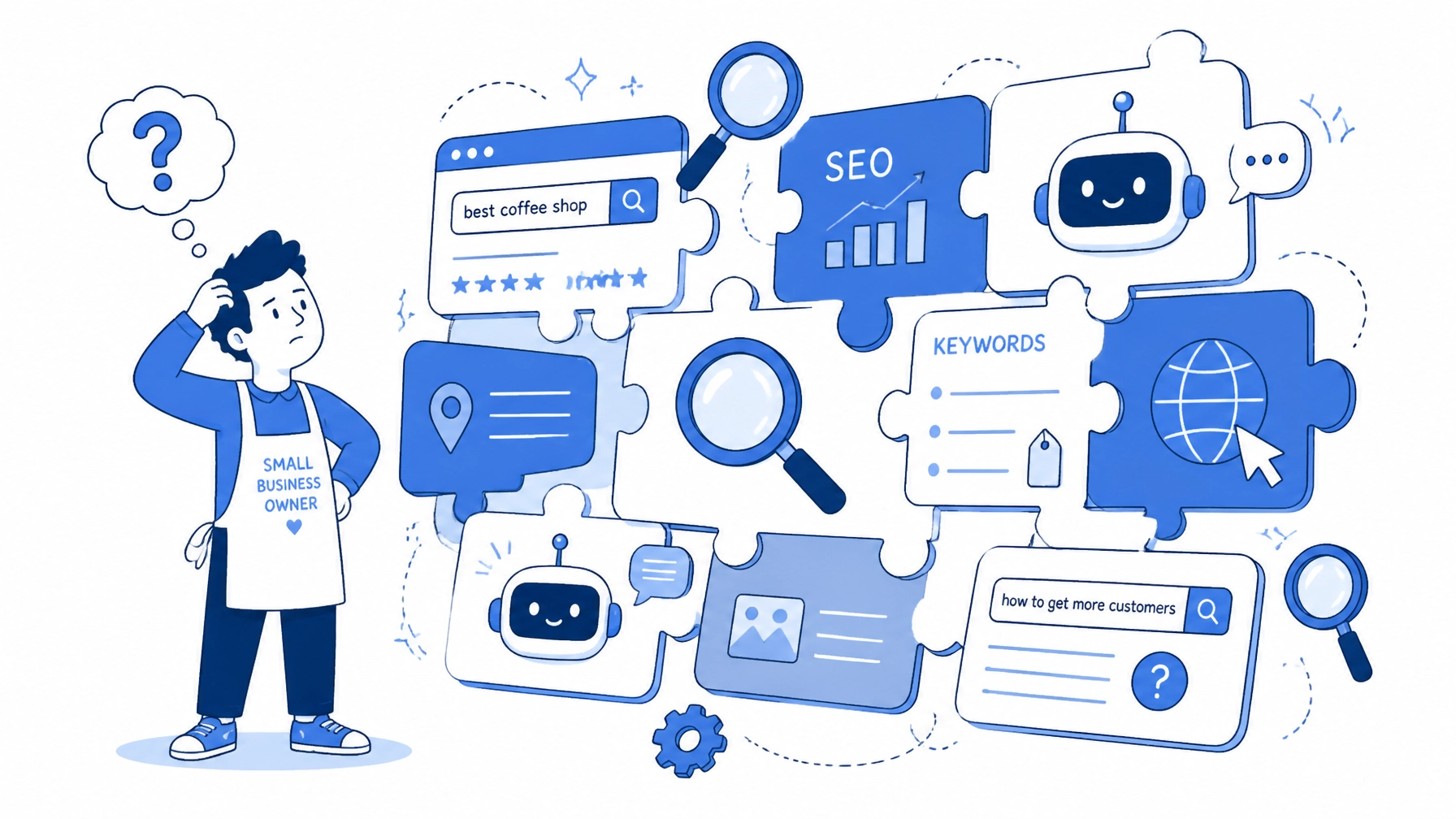

SEO has changed more in the last year than it did in the previous ten. If you are still using a checklist from 2020 you are likely losing traffic every day. Search engines now use AI to understand meaning rather than just counting keywords.
Many businesses struggle because they treat SEO marketing like a static chore. It is actually a fast-moving target. We see the same errors over and over again. Here are the seven biggest mistakes you are making and exactly how to fix them
1. Ignoring AI Search Optimization
Most people still focus on getting blue links on page one. In 2026 search engines often provide the answer directly through AI Overviews. If your content cannot be easily summarized by an AI you will not appear in these boxes. This is a massive missed opportunity for visibility.
The Fix: You need to write for both humans and machines. Use clear headings and bullet points. Start your articles with a concise summary of the answer. We suggest looking at our guide on AI-driven SEO vs traditional SEO to see the difference. Structure your data so an AI can find the facts fast.

2. Neglecting Entity Signals
Search engines no longer just look at words. They look at "entities" which are real-world things like your brand, your experts, and your products. If the internet does not know who you are or what you do you will not rank well. Many businesses fail to connect the dots between their social media, their website, and their reviews.
The Fix: Build your brand entity. You requested better rankings but you found that keywords alone are not enough. Create a detailed "About" page. Link to your professional profiles. Ensure your business name and details are identical everywhere online. This helps search engines understand that you are a trusted authority in your field.
3. Poor Structured Data
Structured data or Schema markup is code that tells search engines exactly what is on your page. If you have an FAQ but no FAQ Schema you are making the search engine guess. Most small businesses ignore this because it feels too technical.
The Fix: Use Schema markup for everything possible. This includes products, reviews, and local business information. It makes your search results look better with star ratings and price info. If this sounds too hard our managed IT support team can help implement these technical details for you.
4. Keyword Cannibalization
This happens when you have five different pages all trying to rank for the same word. You end up competing with yourself. Search engines get confused and often choose to rank none of your pages well. It splits your "authority" into small pieces instead of one strong signal.
The Fix: Audit your content. If you have three blog posts about "Search Engine Optimization" you should merge them into one giant, amazing guide. Use topic clusters to organize your site. Have one main "pillar" page and link smaller, specific posts to it.

5. Thin and AI-Generated Content
It is very easy to click a button and generate 100 blog posts with AI. The problem is that everyone else is doing the same thing. Search engines are now filtering out "thin" content that does not add anything new. If your blog sounds like a robot wrote it nobody will read it and Google will ignore it.
The Fix: Add a human touch. Use real case studies and personal experiences. Share data that only your company has. We recommend focusing on quality over quantity. One great post that actually helps a customer is worth more than fifty generic ones. Check out our custom website design philosophy which focuses on unique value rather than templates.
6. Ignoring Local SEO
Many businesses think they need to rank across the whole country. In reality most customers are looking for someone nearby. If you are not optimizing for local search you are invisible to the people most likely to buy from you. This includes your Google Business Profile and local citations.
The Fix: Claim and optimize your local listings. Upload fresh photos of your team and office. Ask your happy customers for reviews. Do not mention specific city names in your content just to trick the system. Instead focus on being the best provider for your local community through helpful, relevant information.

7. Tracking the Wrong Metrics
Are you celebrating because your "impressions" went up? That is a mistake. Impressions do not pay the bills. Many businesses look at vanity metrics like total traffic but ignore the fact that none of that traffic is buying anything.
The Fix: Focus on conversions and ROI. Use tools to see how many people actually called you or filled out a form. If your SEO marketing is not bringing in new customers it is not working. We suggest setting up clear goals in your analytics to track what matters. Our team focuses on digital growth and results so you know exactly what you are getting for your investment.

SEO is not a "set it and forget it" task. It requires constant attention and a willingness to adapt. If you found that your current strategy is failing we can help. WorldWise has been helping businesses navigate the web since 1994. We know what works and we can fix these mistakes for you.