
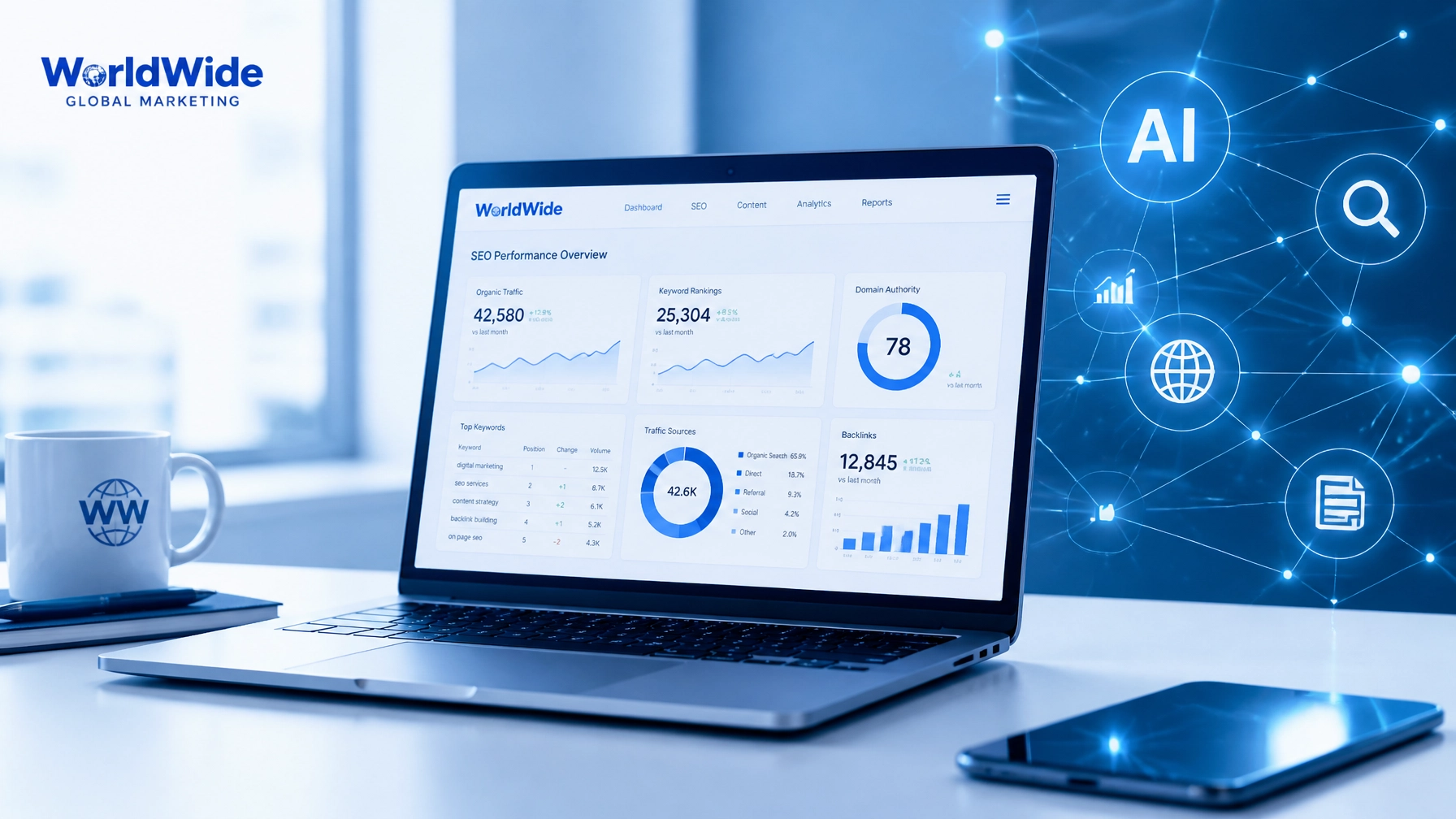

Search engines are not what they used to be and your strategy must change. AI now powers how information is found and processed online. If you want your business to remain visible in 2026, you need a website built for both humans and machines.
We see many businesses struggling to keep up with these shifts. Traditional keyword stuffing is dead and old-school tactics no longer move the needle. You need a modern approach to SEO marketing that prioritizes clarity and authority.
Here are 10 things you should know about AI-ready SEO.
1. Intent is the new keyword
Keywords were once the primary focus for search engine optimization but AI has changed that. Large language models (LLMs) now understand the context behind a search. They look at what a user actually wants to find instead of just matching words.
We suggest you stop chasing high-volume keywords and start mapping your content to user intent. Ask yourself what problem your customer is trying to solve. When your content provides a direct solution, AI engines are more likely to cite your brand as a source.
2. Your web design must be semantic
AI crawlers read your site differently than a person does. They look for a clear, logical structure in your code. This is where professional web design becomes a critical SEO tool.
Use proper heading hierarchies and clean HTML. If your site structure is messy, AI agents will struggle to index your information. A well-organized site helps search engines understand the relationship between your services and your expertise.

3. Answer-first content wins
AI Overviews and chat-based search engines prioritize quick answers. If a user asks a question, the AI looks for a concise response it can pull directly from a page.
We recommend using "atomic answers" in your blog posts and service pages. These are 40-60 word summaries located at the top of a section. By providing a clear answer immediately, you increase your chances of appearing in zero-click search results.
4. Structured data is non-negotiable
Schema markup or structured data is a translator for search engines. It tells the AI exactly what your content represents - whether it is a product, a review, or a FAQ.
You should implement JSON-LD schema across your entire site. This backend data makes it easier for AI to extract facts about your business. Without it, you are leaving your visibility to chance.
5. E-E-A-T is your biggest asset
Google and AI platforms prioritize Experience, Expertise, Authoritativeness, and Trustworthiness (E-E-A-T). AI can generate text but it cannot replicate real-world experience.
You should highlight your team’s credentials and years of industry presence. At WorldWise, we have been helping businesses since 1994 and that history is a significant trust signal. Show your certifications and case studies to prove you are a reliable source.

6. Mobile speed dictates rankings
Slow websites are penalized by both users and search engines. With mobile-first indexing, your site must load almost instantly on a smartphone.
We suggest you monitor your Core Web Vitals closely. A fast, responsive site is a prerequisite for any digital marketing success. If your site is laggy, users will leave before they even see your offer.
7. Optimize for conversational queries
People are searching more with their voices and in chat interfaces. They use full sentences like "Where can I find the best SEO marketing services?" instead of just typing "SEO agency."
Your content should reflect this natural language. Use question-based headings (H2s and H3s) to match how people actually talk. This helps your site show up in voice search and AI chat responses.
8. Generative Engine Optimization (GEO)
A new field called GEO is emerging. This involves optimizing your content specifically to be cited by AI tools like ChatGPT or Perplexity.
Focus on factual density and information gain. Provide original data, unique insights, and verifiable statistics. AI models prefer content that adds new value to their training data rather than repeating what is already found online.

9. Security influences visibility
A site that is not secure will not rank well. Search engines protect their users by favoring websites with strong cybersecurity measures.
We suggest regular network audits and maintaining up-to-date SSL certificates. Our IT support and cybersecurity services ensure your digital infrastructure is solid. A secure site builds trust with both robots and humans.
10. SEO is a long-term partnership
You cannot "set and forget" your search engine optimization. AI algorithms change daily and your competitors are always moving.
The most successful businesses treat digital marketing as a long-term investment. Our average client relationship exceeds 10 years because we adapt to these changes together. You need a team that aligns your website with your evolving brand goals.
We are ready to help you navigate this new AI landscape. If you need a website that works and a strategy that delivers results, we suggest you reach out to us today.