


Voice search isn't coming: it's already here. With 28% of consumers using voice assistants daily and projections showing voice will represent 50% of all searches by 2025, your business needs to optimize for this shift now.
The numbers tell the story: 71% of users prefer voice over typing, and 76% of voice searches target local businesses. If you're still focusing only on traditional text-based SEO, you're missing a massive opportunity to connect with customers who are literally asking for what you offer.
How Voice Search Changes Everything
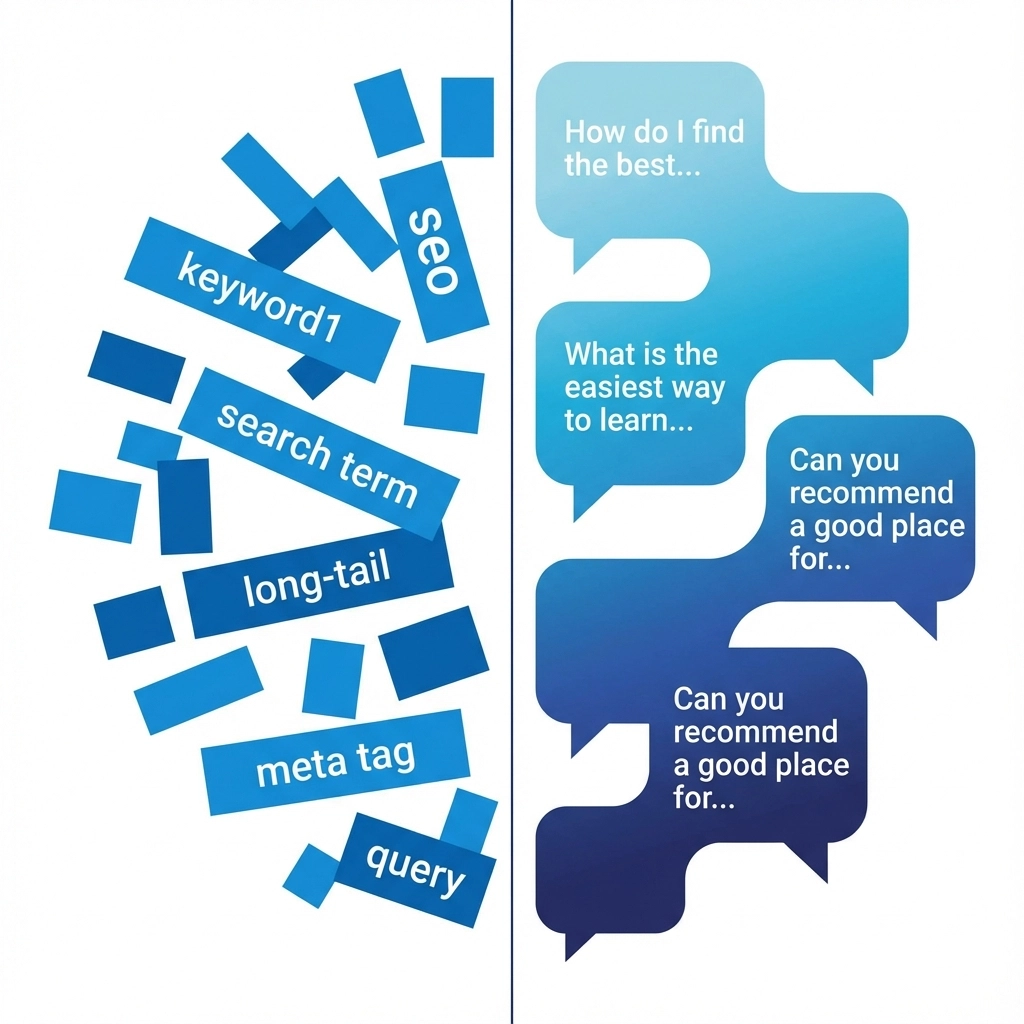
Voice searches work completely differently than typing into a search box. When someone types, they might search for "coffee shop." When they speak, they ask "Where's the best coffee shop near me that's open right now?"
This shift means your SEO strategy needs to evolve. Voice queries are conversational, longer, and more specific. They're also heavily location-focused: 46% of voice searches have local intent.

Target the Way People Actually Talk
Start by replacing your short, choppy keywords with natural language phrases. Instead of targeting "digital marketing," go after "how can small businesses improve their digital marketing on a limited budget?"
This approach might seem counterintuitive since these longer phrases often have lower search volumes. But here's the thing: a perfectly phrased question with moderate search volume usually converts better than a high-volume but awkward keyword.
Use Google Search Console to find question-based queries that already drive traffic to your site. Filter for keywords containing "how," "what," "where," "when," and "why." These are your goldmine for voice search optimization.
Build Content That Answers Real Questions
Create comprehensive FAQ sections that address the questions your customers actually ask. Keep your answers between 30-40 words for optimal voice assistant readability.
Don't just list generic questions. Dig into the specific problems your audience faces. If you're a web design company, don't just ask "What is responsive design?" Ask "Why does my website look broken on mobile phones and how can I fix it?"
Make sure you implement FAQPage schema markup on these sections. This structured data increases your chances of being selected for voice search results.
Master the Technical Foundation
Structured data is probably the most critical technical element for voice search success. Voice assistants rely on this markup to understand and categorize your content.
Focus on these schema types:
FAQPage Schema for your question-and-answer sections
LocalBusiness Schema for location-based searches
HowTo Schema for instructional content
Article Schema for blog posts and news content
Organization Schema for brand credibility
Review Schema for social proof
Don't try to implement everything at once. Start with FAQPage and LocalBusiness schemas, then expand from there.
Claim Position Zero
Position zero: the featured snippet at the top of search results: is where voice assistants typically pull their answers. When someone asks Alexa or Google Assistant a question, they're usually reading from a featured snippet.
Track which of your keywords currently show featured snippets and identify which of your pages appear there. Then optimize your content specifically to win these spots by providing clear, concise answers to common questions.
Structure your content with clear headings, bullet points, and numbered lists. Voice assistants love well-organized information they can easily extract and read aloud.

Dominate Local Voice Search
Since many voice searches are location-based, local SEO becomes crucial for voice optimization. Start by claiming and completely optimizing your Google Business Profile.
Fill out every field: business name, address, phone number, hours, website, and business description. Add photos of your location, team, and work. Keep your information consistent across all online directories.
Generate and respond to customer reviews systematically. Reviews strengthen your local prominence and often appear in voice search results. When someone asks "What's the best web design company near me," positive reviews help voice assistants recommend your business.
Create location-specific content without being spammy. Write about local events you're involved in, community partnerships, or area-specific services you provide.
Your 90-Day Implementation Plan
Weeks 1-4: Foundation Setup Audit your current technical SEO focusing on mobile performance and page speed. Voice assistants prioritize fast, mobile-friendly sites. Analyze your existing search rankings and identify keywords that trigger featured snippets.
Review your Google Business Profile for completeness and accuracy. Check that your business information matches across all directories where you're listed.
Weeks 5-8: Content Transformation Start converting your existing content to answer specific questions. Create pillar content on your core topics, then develop supporting content that addresses related questions.
Write how-to guides optimized for "how do I" queries. Develop comparison content for "best X vs Y" searches. Every piece of content should follow natural language patterns.
Weeks 9-12: Advanced Optimization Implement structured data across your priority pages. Set up tracking for voice search metrics and featured snippet performance.
Test your voice search performance across different devices and assistants. Search for your target keywords using voice on your phone, smart speakers, and other devices to see how you rank.

Quick Wins for Local Businesses
If you run a local business, local SEO optimization often delivers faster results than general voice search optimization. Focus on these immediate improvements:
Ensure your Google Business Profile is 100% complete and accurate. Add local content that uses neighborhood and service-area language naturally. Respond to every review to strengthen your local prominence signals.
These actions improve the location signals that voice assistants rely on when answering proximity-based queries like "web design company near me" or "who can fix my website today."
Measure Your Progress
Track your performance using specific voice search metrics. Monitor rankings for question-based keywords and long-tail phrases. Watch your featured snippet wins and losses.
Use Google Search Console to analyze conversational query patterns. Look for questions people are asking that you haven't optimized for yet.
Set up alerts for your brand name combined with question words. This helps you identify when people are asking about your business specifically.

Stay Ahead of the Competition
Most businesses still focus exclusively on traditional text SEO. By optimizing for voice search now, you gain several competitive advantages:
You'll rank for conversational queries competitors haven't targeted yet. You'll capture higher-intent traffic from voice commerce users who often have immediate purchase intent. You'll establish authority through featured snippet rankings that build trust with potential customers.
The businesses that win in voice search are the ones that understand how people naturally communicate. They create content that answers real questions in the way people actually ask them.
Voice search optimization isn't just about technology: it's about understanding your customers better. When you optimize for voice, you're optimizing for the way people naturally think and speak about their problems.
Start with the basics: claim your local listings, create natural language content, and implement structured data. Then expand into more advanced strategies as you see results.
The voice search revolution is happening whether you participate or not. The question is: will you lead the change or scramble to catch up later?
If you need help implementing these voice search strategies or want to discuss how they apply to your specific business, contact our team for a consultation.