

It is 2026 and the digital landscape has changed drastically since the early 2020s. You might think your small business is too small to be a target for hackers. You assume they only go after the big corporations with deep pockets. That is a dangerous mistake. We see small business owners every day who believe they are invisible to cybercriminals. The reality is quite the opposite
Cybercriminals do not just look for the biggest payday anymore. They look for the easiest entry point. Most of the time that entry point is a small business with outdated security. The data suggests that cybersecurity is no longer an optional line item in your budget. It is a core requirement for staying in business
The Current Threat Landscape for Small Businesses
Small businesses currently account for 43 percent of all cyberattack targets. This is not a coincidence. Hackers prioritize small targets because they usually have weaker defenses. They lack employee training and have fewer resources than large enterprises. In 2026 we found that attackers are using sophisticated automation to find these gaps
Artificial intelligence has changed the game for hackers. They no longer have to manually search for vulnerabilities in your website or network. They use AI bots to scan thousands of businesses every hour. These bots look for unpatched software or weak passwords. If your business has a vulnerability the bot will find it and exploit it instantly
We suggest you look at your current strategy and determine if you are actually prepared. Only 14 percent of small businesses are truly ready to defend against these types of attacks. This creates a massive gap between the level of threat and the level of protection
Why Hackers Want Your Data
You might think you do not have anything worth stealing. You are wrong. Every business has data that is valuable on the dark web. This includes customer names, email addresses, credit card numbers, and employee social security numbers. Even if you do not store payment info you likely have contact lists that can be used for phishing campaigns
Ransomware is another major threat. A hacker does not need to steal your data to hurt you. They just need to lock you out of it. They encrypt your files and demand a payment to release them. For a small business this can halt operations entirely. If you cannot access your customer database or your accounting software your business stops moving
The Financial and Operational Impact of a Breach
The cost of a cyberattack is often higher than the business can handle. The average cost of a data breach for a small business now exceeds $150,000. This includes legal fees, technical recovery, and notifying customers. It also includes the cost of downtime. If your website goes down you lose sales immediately. You can see our web hosting options to ensure you have a secure foundation for your site
The most alarming statistic is that 60 percent of small businesses that experience a significant cyberattack go out of business within six months. This is not just because of the immediate financial loss. It is because of the damage to the brand reputation. Customers trust you with their information. Once that trust is broken it is almost impossible to get back
Common Vulnerabilities We See Daily
Most cyber incidents stem from preventable mistakes. You do not need an enterprise-level budget to stay safe. You need to address basic security gaps. Here are the most common issues we encounter:
- Weak Passwords: Many employees still use simple passwords or reuse the same password across multiple sites. This is a gift to hackers
- Missing Multi-Factor Authentication (MFA): MFA is the single most effective way to block unauthorized access. If you do not have it enabled you are wide open
- Outdated Software: Hackers love "zero-day" vulnerabilities. If you do not update your plugins and operating systems you are leaving the door unlocked
- Phishing Scams: Employees often click on links in emails that look legitimate but are actually designed to steal login credentials
- Unsecured Wi-Fi: Running your business on a public or poorly secured network is a recipe for disaster
We provide computer support to help businesses identify and close these gaps before they become a problem
The Role of Managed IT Support
In 2026 managing your own security is nearly impossible for a small business owner. The threats evolve too fast. This is where managed IT support becomes essential. Instead of reacting to a hack after it happens you have a team proactively monitoring your systems
Managed IT support provides several layers of protection. This includes endpoint detection and response which monitors every device connected to your network. It also includes regular security audits and employee training. When you partner with experts you get access to the same tools that big corporations use but at a price that fits your budget
We suggest you review our capabilities statement to see how we handle these technical challenges for our clients. Having a dedicated team means you can focus on running your business while we handle the cybersecurity aspects
Why Backups are Your Last Line of Defense
If everything else fails your backup is the only thing that will save you. Many small businesses think they have a backup but they never test it. A backup that does not work is the same as having no backup at all
A robust backup strategy involves the 3-2-1 rule. You should have three copies of your data. These copies should be on two different types of media. One copy must be stored off-site or in the cloud. This ensures that even if your physical office is compromised your data remains safe. We offer integrated solutions through our support services to automate this process
Remote Work and New Security Risks
The shift to remote and hybrid work has created new vulnerabilities. Employees are now accessing sensitive company data from home networks. These networks are often less secure than a professional office environment. They may be using personal laptops that lack the necessary security software
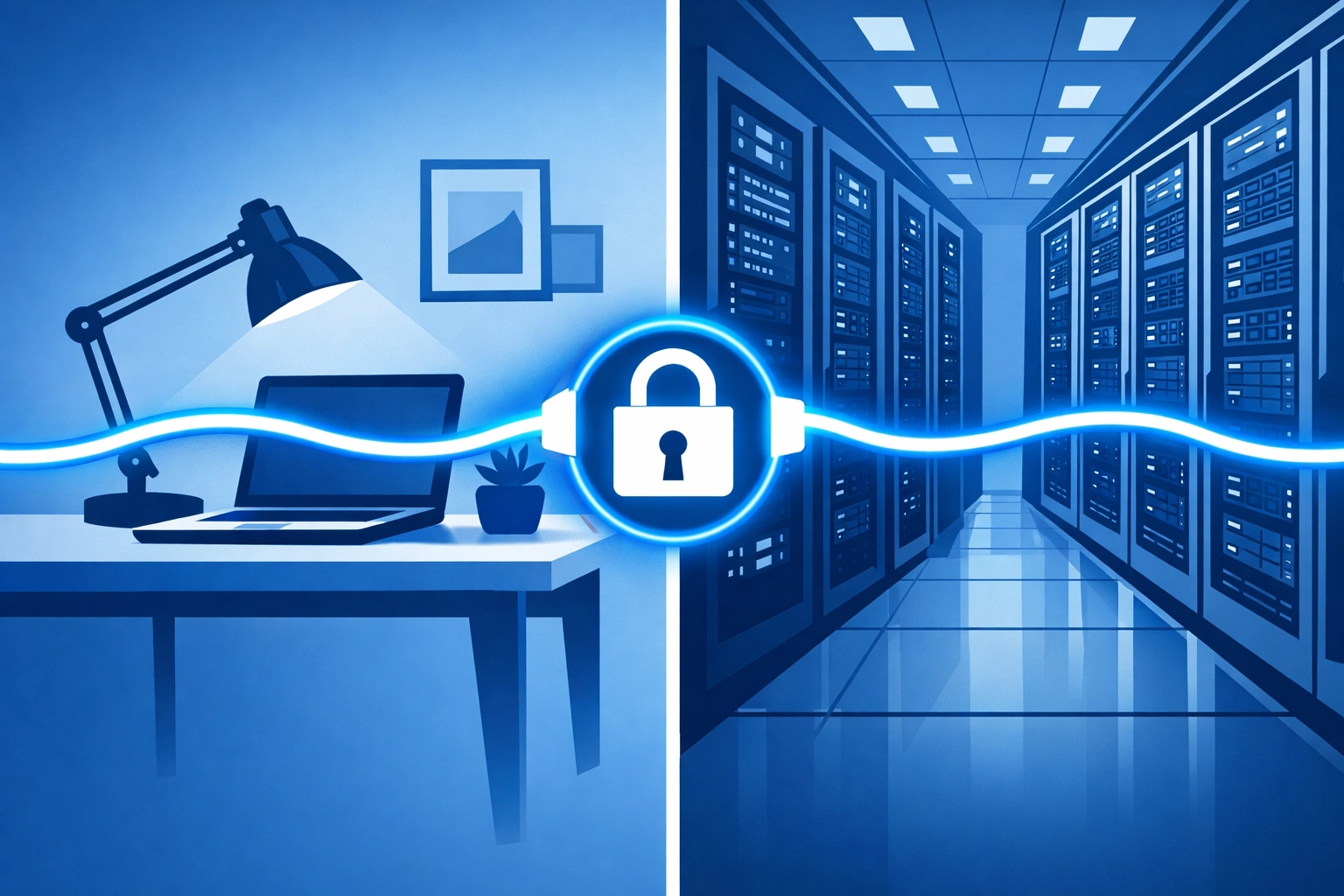
To secure a remote workforce you need to implement secure VPNs and strict access controls. You need to ensure that every device used for work is managed and monitored. If an employee's home computer is infected with malware it can spread to your entire company network the moment they log in
Steps You Can Take Right Now
You do not have to fix everything in one day. Start with the basics and build your defense over time. We recommend these immediate actions:
- Audit your passwords: Require everyone in your company to use a password manager
- Turn on MFA: Enable multi-factor authentication on every account that supports it
- Update your software: Run all pending updates on your computers and website
- Train your staff: Hold a brief meeting to show your team how to spot a phishing email
- Check your backups: Verify that your data is actually being backed up and that you can restore it if needed
If you are unsure where to start our team can help you with a digital marketing and security assessment. We look at your entire digital presence from your web design to your back-end servers
Cybersecurity as a Competitive Advantage
In 2026 being secure is a selling point. Customers are more aware of data privacy than ever before. If you can demonstrate that you take their security seriously you will win more business. Mentioning your security protocols in your marketing materials can build trust and set you apart from competitors who are lagging behind

A secure business is a stable business. You avoid the chaos of a breach and the financial ruin that often follows. You protect your hard work and your employees' livelihoods. Cybersecurity is not just a technical issue; it is a fundamental part of your business strategy
Conclusion
The threat is real but it is not unmanageable. Small businesses are targets because they are often easy targets. By taking basic steps and utilizing managed IT support you can significantly reduce your risk. Don't wait until you see a ransom note on your screen to take action
If you want to ensure your business is protected in 2026 reach out to us. We can help you build a secure foundation for your growth. You can contact us today to get started with a consultation. Let's make sure your business is one of the ones that thrives despite the changing threat landscape