
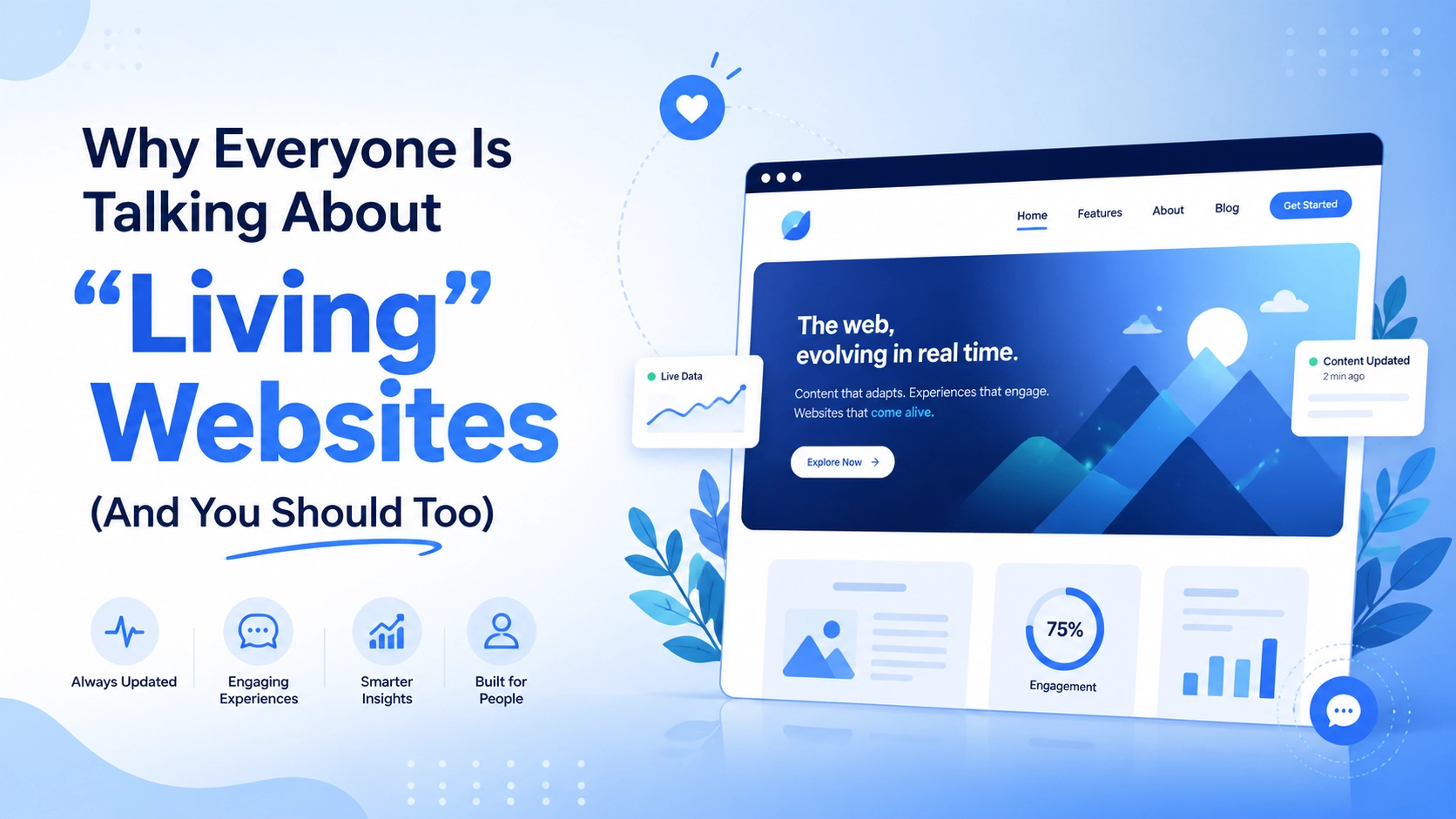

The internet is full of static websites that look like digital brochures. They stay still and wait for users to do all the work. This approach is failing. In 2026, users want more than just information. They want an experience that feels responsive and human. This is why "living" websites are the new standard for professional web design
A living website is an interface that uses subtle motion and interactions to feel dynamic. It reacts to the user in real-time. It moves, breathes, and guides the eye without being distracting. If your site feels like a printed page on a screen, you are losing potential customers to competitors who offer a more engaging experience
The Problem With Static Design
Static websites are predictable and boring. When a user lands on a page that does nothing, they feel a disconnect. There is no feedback loop. The user clicks a button and waits. They scroll and nothing happens except the text moving up. This lack of engagement leads to high bounce rates
In an era where AI generates thousands of basic pages every minute, static design looks cheap. It suggests that the brand is not keeping up with technology. Users sub-consciously equate a "dead" website with a stagnant business. To stay relevant, your digital presence must feel active and alive

What Makes a Website "Living"
A living website is built on the principle of human-centered design. It uses several key techniques to create a sense of life:
Micro-Interactions
These are small visual responses to user actions. When you hover over a button, it might glow or slightly shift. When you fill out a form, the field might change color to show it is active. These small cues tell the user the site is listening to them
Purposeful Motion
Motion should never be random. In a living design, motion guides the eye. An image might gently fade in as you scroll to it. A menu might slide out with a natural bounce. This motion creates a narrative flow that keeps users scrolling down the page
Cursor Reactivity
Modern browsers allow websites to track the cursor position with precision. Elements on a living site might lean toward the cursor or create a subtle parallax effect. This creates a 3D feel that makes the screen feel like a physical space rather than a flat surface
Why Human-Centered Design Matters Now
We are seeing a shift away from sterile, algorithmic layouts. Users are tired of seeing the same templates everywhere. A living website feels intentional. It shows that a human designer thought about the user journey. This builds trust and authenticity
When a site feels alive, it creates an emotional connection. It feels approachable and warm. This is vital for digital marketing because trust is the primary driver of conversions. If your site feels like a machine, users will treat it like one. If it feels human, they are more likely to engage with your brand

The Strategy Behind the Movement
Transitioning to a living website requires a solid strategy. You cannot simply throw animations at an old site and hope for the best. Movement must be balanced. Too much motion causes "scroll fatigue" and can make users feel motion sick. Too little motion makes the site feel broken
The Rule of Restraint
The best living designs are subtle. You should notice the ease of use before you notice the animations. The goal is to improve usability, not just to look flashy. We focus on "micro-movements" that feel organic. Elements should breathe, not vibrate
Performance First
Adding motion can slow down a site if it is not handled correctly. A slow site is a dead site. We use modern coding practices to ensure that animations are lightweight. This maintains high speed while providing a rich visual experience. This balance is critical for maintaining your search engine optimization rankings

Boosting Your Conversion Rate
Living websites are not just about aesthetics. They are a tool for conversion rate optimization. By guiding the user’s attention, you can lead them directly to your call-to-action buttons.
For example, a subtle pulse on a "Get Started" button can increase click-through rates significantly. An interactive infographic that reveals information as the user interacts with it keeps them on the page longer. The longer a user stays on your site, the more likely they are to become a lead. You can see examples of this in our portfolio
Guiding the Narrative
Motion helps tell your story. Instead of a block of text, you can use "motion narrative" to reveal your process step-by-step as the user scrolls. This makes complex information easier to digest. It turns a boring read into an interactive journey
Technical Implementation and Accessibility
Creating a dynamic site involves technical challenges. We must ensure that the "living" elements do not interfere with accessibility. Some users prefer reduced motion due to vestibular disorders. A professional design includes code that respects "prefers-reduced-motion" settings in the user's browser
We also focus on cross-device compatibility. A living website must feel just as responsive on a mobile phone as it does on a high-end desktop. This is where professional web and mobile development becomes essential. Elements must scale and adapt without losing their interactive quality

How to Get Started
If your current website feels static and outdated, it is time for an upgrade. The gap between "living" sites and "dead" sites is widening. Brands that adopt this trend early will capture more attention and build stronger customer loyalty
We suggest a three-step approach:
- Audit your current site - Identify where users are dropping off. Usually, it is where the experience feels the most static
- Define your motion language - Decide how your brand should move. Should it be fast and energetic or slow and luxury?
- Implement micro-interactions - Start with the small things that improve the user experience immediately

The WorldWise Advantage
At WorldWise, we specialize in creating digital experiences that stand out. We don't just build websites; we build dynamic platforms that grow with your business. Whether you need a complete redesign or a new strategy for your current presence, we can help
A website should be more than a static file. It should be a living part of your sales team. It should work for you 24/7 to engage, inform, and convert visitors. If you are ready to move away from the brochure style and into the future of web design, we are ready to build it for you
Ready to breathe life into your online presence? Get started today and let's talk about how a living website can transform your brand
For more information about our services or to see how we handle support, feel free to reach out to us at any time via our contact page