
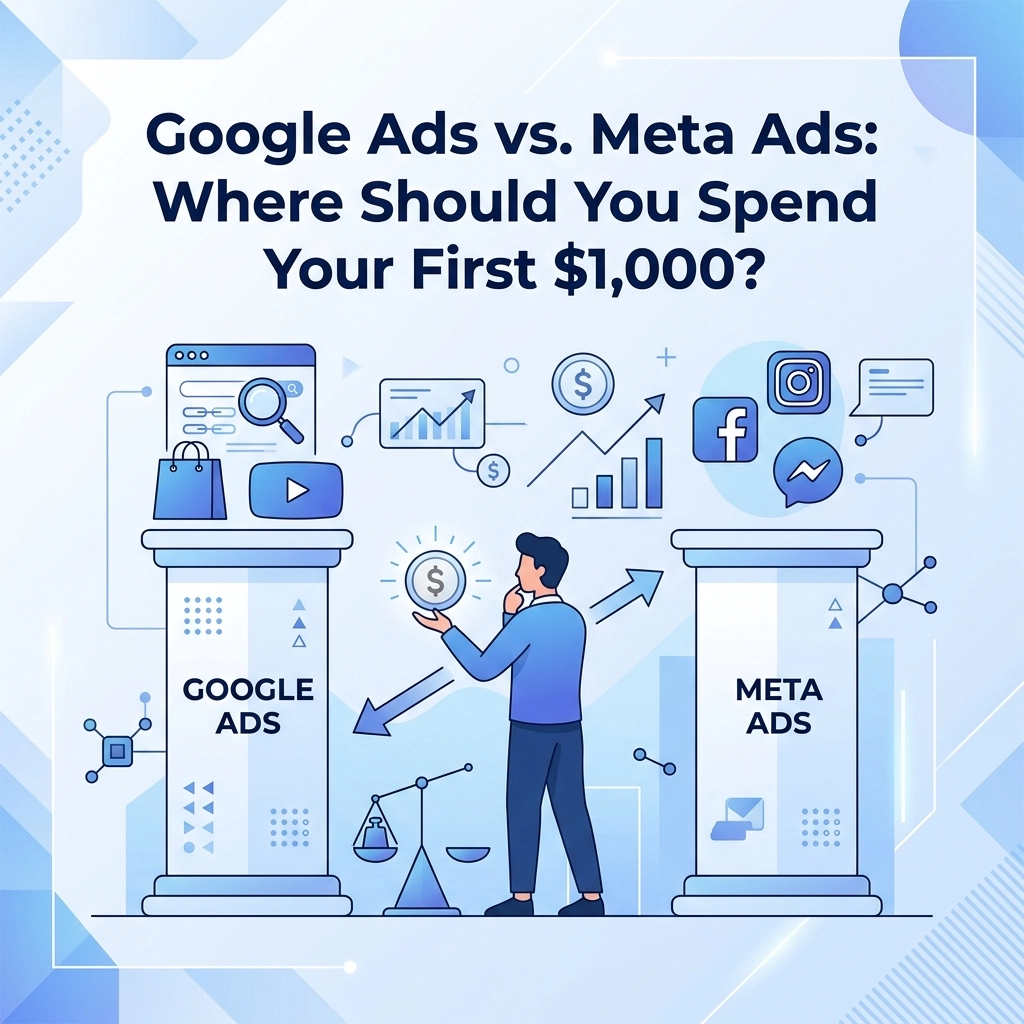

You have a $1,000 budget for digital marketing and you need to see a return quickly. This is a common situation for small businesses starting their online journey. The two biggest players are Google Ads and Meta Ads. Choosing between them is not about which platform is "better" in general. It is about which platform is better for your specific business stage and goals
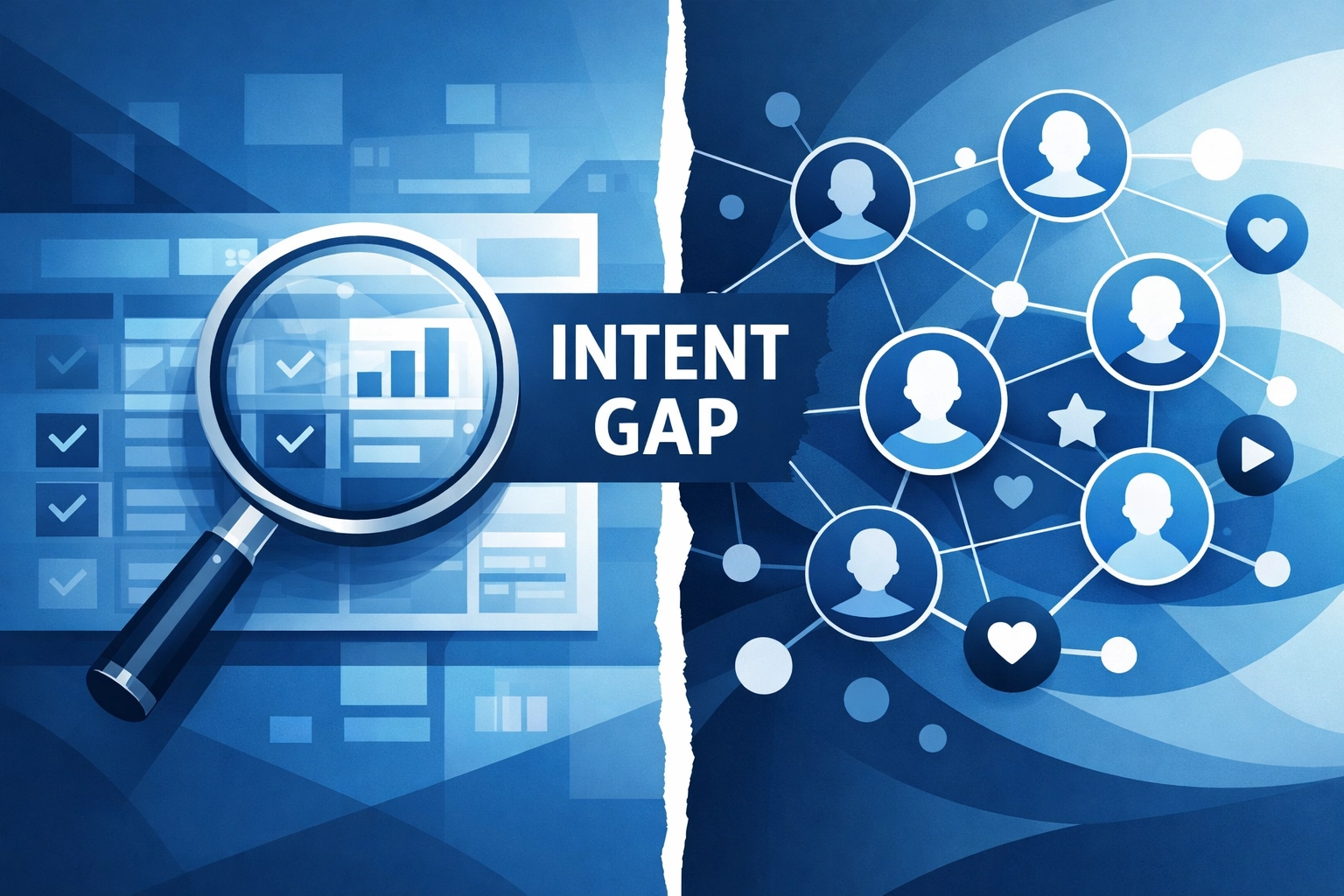
Understanding the intent gap
The biggest difference between these platforms is user intent. Google Ads is intent-based. This means people are actively looking for what you offer. They type a keyword into a search bar because they have a problem or a need right now
Meta Ads is interest-based. This is often called "interruption marketing" because you are showing ads to people while they browse photos or watch videos. They were not looking for you but your targeting suggests they might like your brand
When to choose Google Ads
Google Ads is the king of capturing existing demand. If you sell a service that people need immediately: like a plumber or a locksmith: Google is where you want to be. People do not scroll Instagram looking for an emergency plumber. They go to Google
The pros of Google
- High conversion intent: Users are ready to buy or book
- Highly measurable: You know exactly which search term led to a sale
- Quick results: You can show up at the top of search results within hours
The cons of Google
- High cost per click (CPC): In competitive industries a single click can cost $20 or more
- Complex setup: Managing keywords and negative keywords takes skill
- Limited reach: You can only show up if people are actually searching for your keywords
If you want to dive deeper into how we structure these campaigns you can check out our strategy page
When to choose Meta Ads
Meta Ads: which includes Facebook and Instagram: is better for creating demand. If you have a product that is visual or solves a problem people do not know they have Meta is the winner. It is also excellent for building a brand over time
The pros of Meta
- Lower costs: You can get clicks for less than a dollar in many cases
- Advanced targeting: You can target based on life events like getting engaged or moving house
- Visual storytelling: You can use video and high-quality images to show off your brand
The cons of Meta
- Lower intent: People might click out of curiosity but not be ready to buy
- Creative fatigue: You have to update your ads often or people get bored of seeing them
- Algorithm dependence: Changes to the platform can suddenly affect your performance
Breaking down the math for your first $1,000
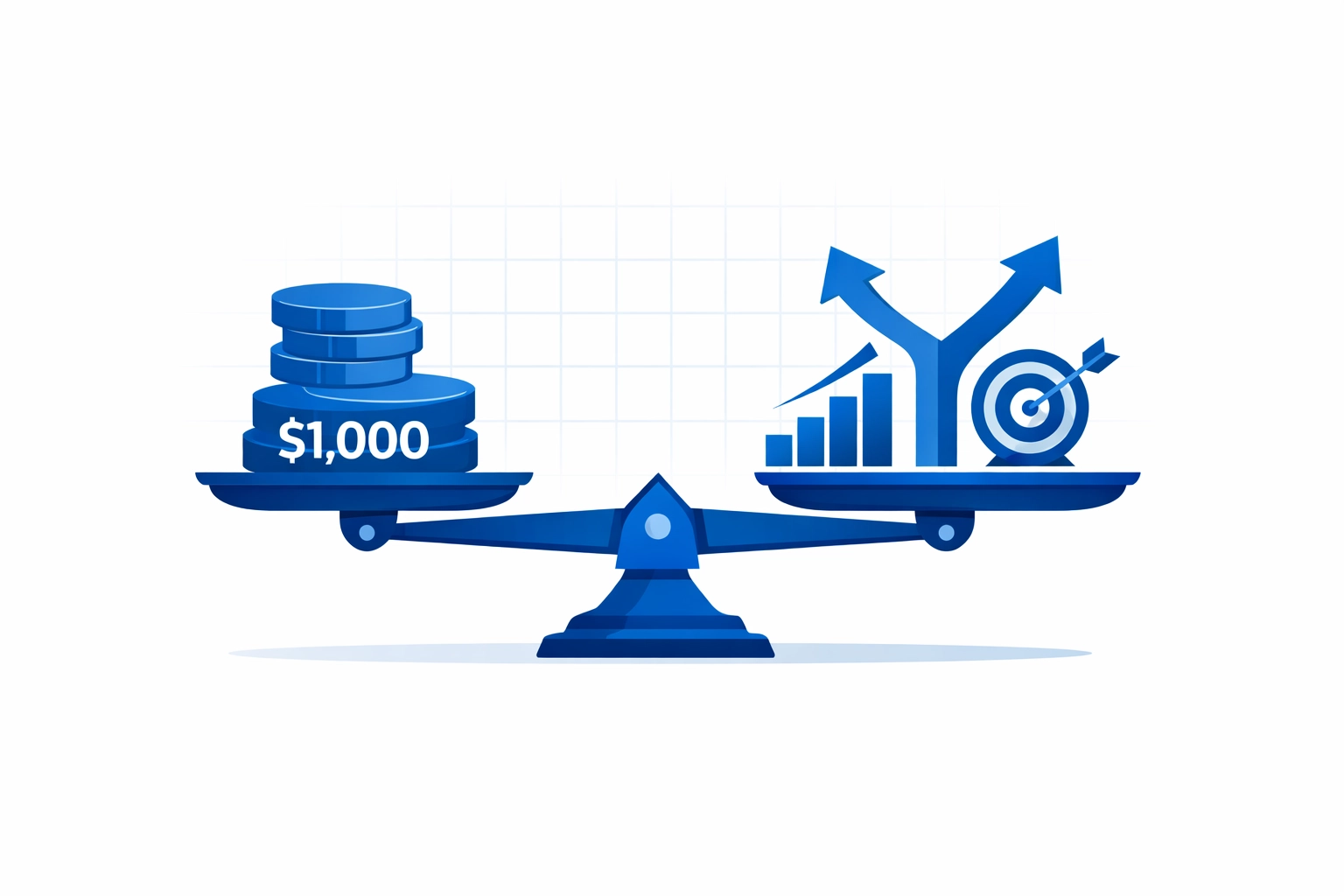
Let's look at what your $1,000 actually gets you on each platform based on 2026 averages
On Google Search the average cost per click is around $5.26. With $1,000 you get about 190 visitors to your site. If your website converts at 5% you get about 9 or 10 leads. That is a cost per lead of $100
On Meta the average cost per click is much lower at around $0.70. With $1,000 you get over 1,400 visitors. Even if the conversion rate is lower: say 2%: you still end up with 28 leads. That is a cost per lead of about $35
This is why many small businesses with a limited budget start with Meta. You get more data and more chances to convert for every dollar spent
The strategy for a $1,000 budget
We suggest a specific path for your first grand. Do not try to split the money 50/50. You will likely spend too little on each platform to get meaningful data
Option A: The Meta-first approach (Recommended)
Put the full $1,000 into Meta Ads. Set a daily budget of about $33. Use this to test three different ad creatives. This approach allows you to see what messaging resonates with your audience. You will get more traffic to your site which helps you build a "retargeting" list for later
Option B: The Google-first approach
Choose this only if you provide a "need-it-now" service. Put the full $1,000 into high-intent search terms. Avoid broad keywords. Focus on "bottom of the funnel" terms where the user is clearly looking to hire or buy immediately
If you are unsure which category your business falls into you can contact us for a quick consultation
Common digital marketing mistakes to avoid
Many businesses waste their first $1,000 by making simple errors. One of the biggest mistakes is sending traffic to a bad website. If your site is slow or hard to use it does not matter how good your ads are. You are just paying to show people a broken experience
Make sure your landing page is optimized before you spend a dime. You can see examples of high-performing sites in our portfolio
Another mistake is failing to set up tracking. You must know where your leads are coming from. Use the Google Tag Manager or the Meta Pixel. Without these you are flying blind
Scaling beyond the first $1,000
Once you find a formula that works you can start to scale. This is when the 70/30 split becomes useful. Many successful businesses spend 70% of their budget on Meta to find new customers and 30% on Google to capture people who are searching for their brand or specific products
This creates a "surround sound" effect. A user sees your ad on Instagram and then later searches for you on Google to finish the purchase
Digital marketing is an investment not an expense
Think of your first $1,000 as a way to buy data. Even if you do not make a massive profit right away you now know which headlines people click and which products they care about. This information is worth more than the $1,000 itself because it guides your future growth
If you are ready to get started with a professional strategy you can fill out our get started form
Summary of the choice
Choose Google Ads if:
- You have a high-ticket item
- You provide an emergency or high-necessity service
- You want leads that are ready to buy today
Choose Meta Ads if:
- Your product is visual or "giftable"
- You want to build brand awareness
- You have a limited budget and want the most traffic possible

We suggest looking at your business through the lens of your customer. If you were them would you search for a solution or would you need to be shown one. That answer tells you exactly where to spend your money
For more information on how we handle full-scale digital marketing check out our marketing services
WorldWise is here to help you navigate these choices. We specialize in creating digital marketing campaigns that actually grow businesses without wasting budget on things that don't work. Reach out to our support team if you have questions about your specific setup